
 Save to Pinterest
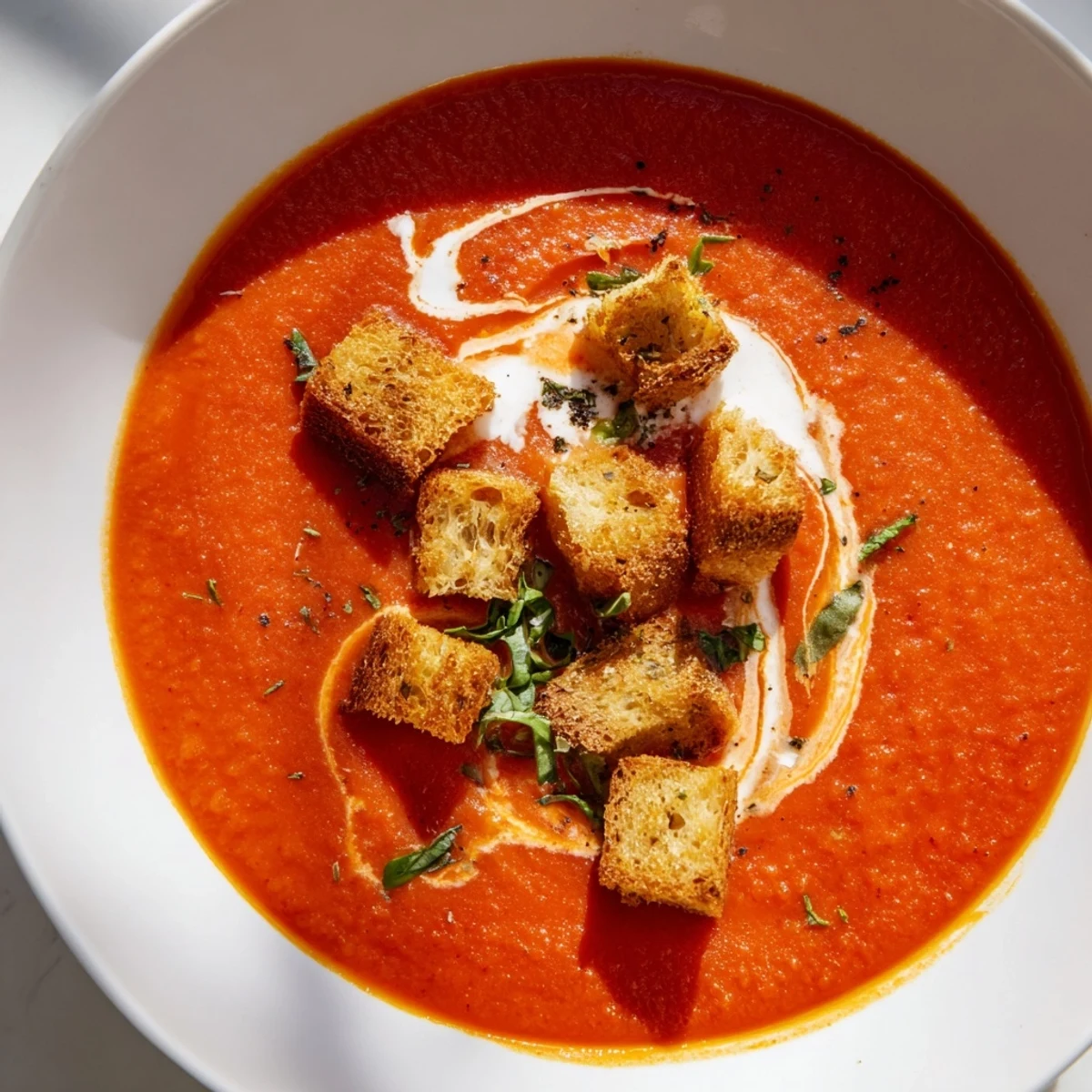
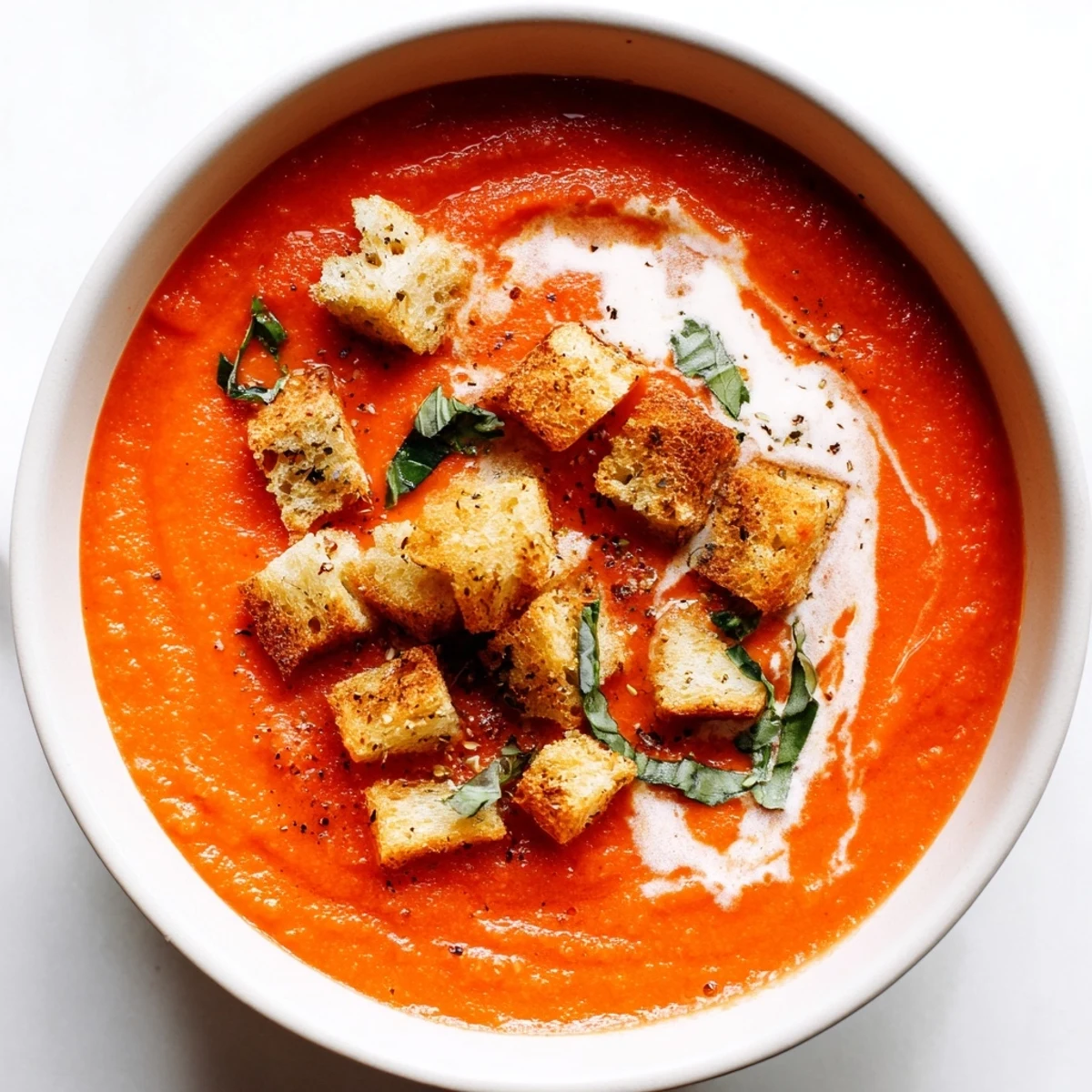
 This soup showcases ripe tomatoes roasted alongside garlic and onions until sweet and caramelized. Blended with fresh basil and vegetable broth, it forms a smooth, aromatic base. Crisp homemade croutons add satisfying texture on top. Optional cream adds richness, while hints of olive oil and herbs balance the flavors. Perfect for a warm, comforting meal with Mediterranean flair.
The first time I made this soup, I wasn't even planning to—I had a head of garlic that had been sitting in my pantry looking increasingly wrinkled, and half a dozen tomatoes from the farmer's market that were going soft. I roasted them together on a whim, and the smell that filled my kitchen was so unexpectedly sweet and deep that I found myself standing at the oven door like someone had cast a spell. That happy accident taught me that the best soups often come from rescue missions in the vegetable drawer, and that roasting transforms everything it touches. Now whenever I have tomatoes and garlic on hand, I know exactly what to do.
I made this for my neighbor one cold Tuesday evening when she'd been dealing with a rough week, and watching her face change as she tasted that first spoonful—the surprise of the sweetness, the way the basil brightness cut through the richness—reminded me why I love cooking for people. She asked for the recipe three times before she left, and now she makes it whenever someone needs comfort at her table too.
Ingredients
- Ripe tomatoes, 2 lbs (900 g): Use tomatoes that smell fragrant at the stem end—this is where the flavor lives, and roasting amplifies it into something almost jammy.
- Garlic, 1 large head: Roasting transforms garlic from sharp and assertive into something sweet and almost nutty, so don't be shy about using a whole head.
- Yellow onion, 1 medium, chopped: The onion dissolves into the soup and adds sweetness and depth that balances the tomato acidity.
- Olive oil, 2 tbsp plus 2 tbsp for croutons: Good olive oil matters here since it's not hidden—use something you'd actually enjoy tasting.
- Vegetable broth, 4 cups (1 L): This is your canvas; I use low-sodium broth so I can taste the roasted vegetables without any competing flavors.
- Fresh basil leaves, 1/2 cup (15 g) plus extra for garnish: Add this after blending so it stays bright green and fragrant—boiling basil turns it dark and muddy.
- Sugar, 1 tsp (optional): Just a pinch if your tomatoes are on the acidic side; taste as you go and only add what you need.
- Salt and freshly ground black pepper: Season in layers—at the roasting stage, after blending, and again at the end when you know the true flavor.
- Heavy cream or plant-based cream, 1/4 cup (60 ml) (optional): A swirl of cream softens the acidity and adds luxury, but the soup is equally lovely without it.
- Day-old bread, 3 cups (120 g) cut into cubes: Slightly stale bread absorbs oil and seasons better than fresh; avoid soft sandwich bread and choose something with actual structure.
- Dried oregano or Italian herbs, 1/2 tsp: This small amount seasons the croutons without overpowering the soup's delicate flavor.
Instructions
- Heat your oven and prep the vegetables:
- Preheat to 400°F (200°C) and arrange everything on baking sheets—cut the garlic head in half horizontally to expose those cloves, halve your tomatoes so they sit flat and can caramelize on their cut side, and chop your onion into pieces that will soften into the soup. Drizzle everything with olive oil and salt, then slide it all into the oven.
- Roast until golden and sweet:
- After 30–35 minutes, your kitchen will smell unreal—the tomatoes should be soft and slightly darkened at the edges, the garlic cloves golden and fragrant. While that's happening, toss bread cubes with olive oil, oregano, and salt, then spread them on another sheet and roast for 10–15 minutes until they're golden and crisp.
- Squeeze out the roasted garlic:
- Once cooled slightly, the garlic cloves slip out of their papery skins like magic. Don't skip this step—it's easier than you'd think and makes the final soup silkier.
- Build the soup base:
- Combine the roasted tomatoes, onions, garlic, vegetable broth, basil, and a tiny pinch of sugar (if you're using it) in a large pot and bring everything to a gentle simmer over medium heat for about 10 minutes. This brief simmer lets the flavors get acquainted before you blend.
- Blend until velvety:
- Using an immersion blender right in the pot (careful of splashes, this stuff is hot), blend until completely smooth—no flecks, no texture, just silk. If you're using a countertop blender, work in batches and return everything to the pot.
- Finish and serve:
- Stir in cream if you're using it, taste for salt and pepper, then ladle into bowls and top with those crispy croutons and a fresh basil leaf. The croutons should stay on top and keep their crunch right up until the moment they hit the hot soup.
 Save to Pinterest
 There's something quiet and restorative about watching someone eat a bowl of soup you made, seeing them slow down a little, maybe close their eyes for a second. That's when I realized this recipe isn't really about technique—it's about creating a moment where someone feels cared for.
The Magic of Roasting
Roasting doesn't just cook these vegetables; it caramelizes their natural sugars and deepens their flavor in a way that no other method can replicate. The tomatoes lose their raw acidity and become almost jammy, while the garlic transforms from pungent and sharp into something almost creamy and sweet. I learned this the hard way by making tomato soup with raw garlic once—it was harsh and one-dimensional—and the difference that 35 minutes in the oven makes is genuinely transformative.
Making It Your Own
This is a forgiving recipe that welcomes your personal touch. Some people add a splash of balsamic vinegar for complexity, others finish with a drizzle of good olive oil, and I've seen versions elevated with crispy sage leaves or a float of pesto. The beauty is that the foundation is so solid that you can experiment without fear—the roasted tomato and garlic base holds up to almost anything you want to add.
Stretching It Further
This soup keeps beautifully in the refrigerator for up to four days, and it actually tastes better the next day once the flavors have had time to get to know each other. You can freeze it (without the cream—add that after reheating), and it rehashes gently on the stovetop. For a lighter version, use more broth and less cream, or add white beans to make it feel more substantial.
- If you're short on time, buy pre-made croutons and upgrade them by tossing them in a hot pan with a little fresh garlic and olive oil for two minutes.
- The soup works beautifully with any crusty bread on the side for dipping, which sometimes feels easier than making croutons from scratch.
- Keep extra basil frozen in ice cube trays with a little olive oil so you can add that bright green flavor to the soup anytime, even in winter.
 Save to Pinterest
 This soup has become my answer to so many moments—when someone needs comfort, when the season is turning, when I want to feel like I've cooked something real. It's simple enough for a quiet night alone and refined enough to serve to people who matter.
Recipe FAQs
- → How do I roast the garlic for the best flavor?
-
Cut the top off the garlic head, drizzle with olive oil, wrap in foil, and roast at 400°F until golden and soft, which brings out its sweet, mellow taste.
- → Can I make the croutons gluten-free?
-
Yes, substitute the bread with gluten-free varieties to keep the croutons crisp and suitable for gluten-free diets.
- → What is the purpose of adding sugar to the soup?
-
A small amount of sugar helps balance the natural acidity of the tomatoes, creating a rounder, smoother flavor.
- → How can I adjust the soup for a vegan diet?
-
Use plant-based cream or omit the cream entirely to keep the soup vegan-friendly without sacrificing creaminess.
- → What herbs complement the croutons best?
-
Dried oregano or Italian herb blends enhance the croutons with aromatic Mediterranean notes that pair well with the soup.
- → Is it necessary to puree the soup completely smooth?
-
Pureeing until smooth creates a velvety texture, but you can pulse less for a chunkier consistency depending on your preference.