
 Save to Pinterest
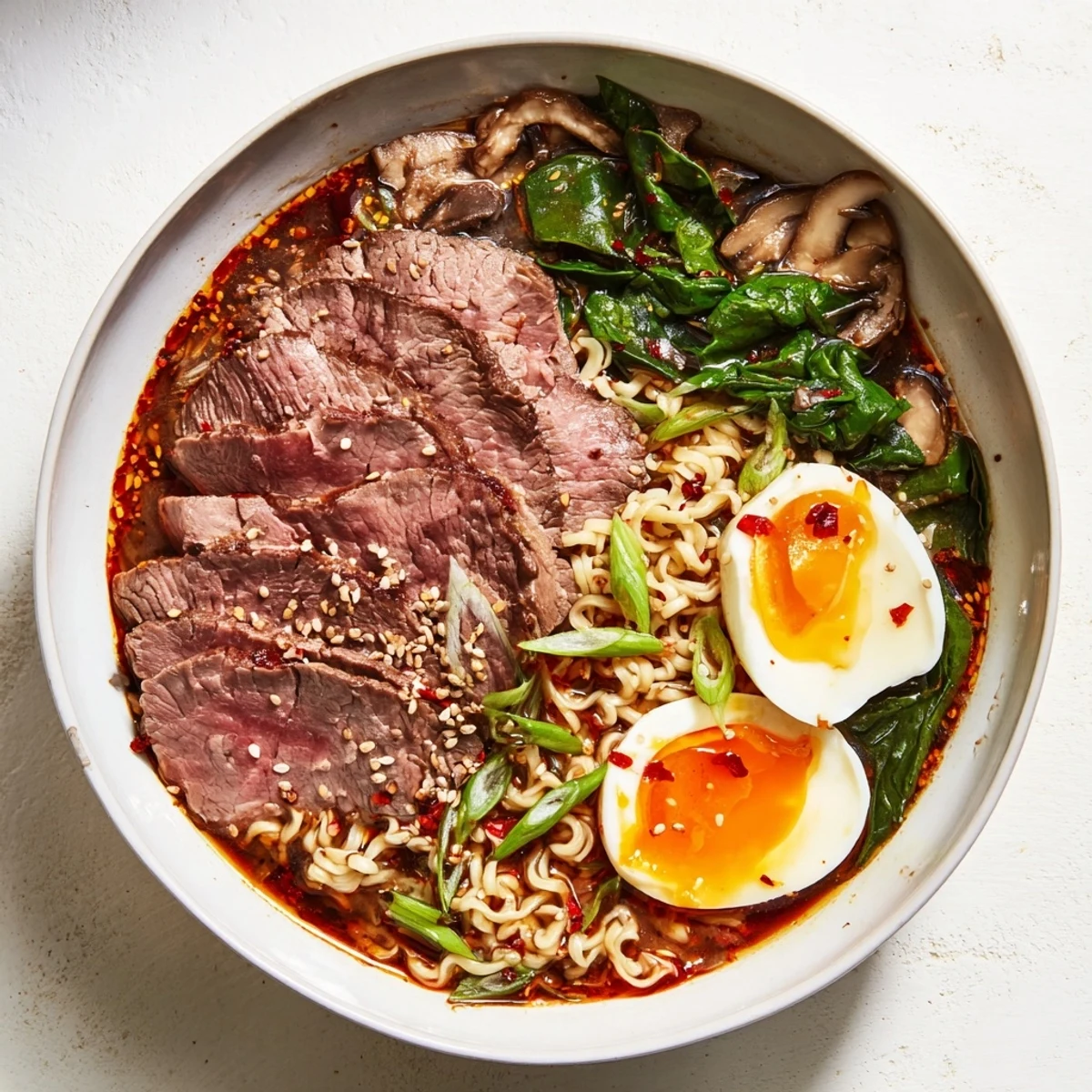
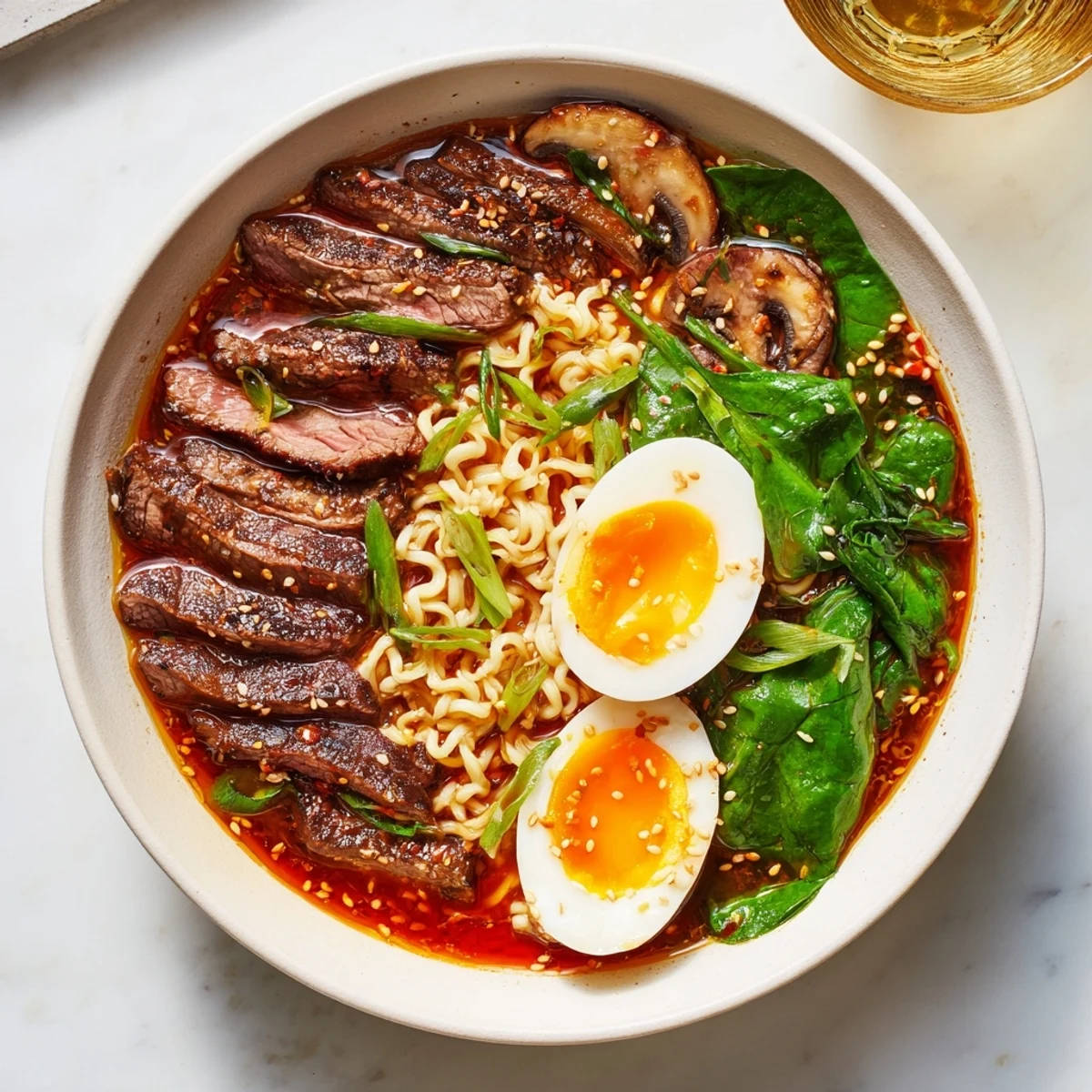
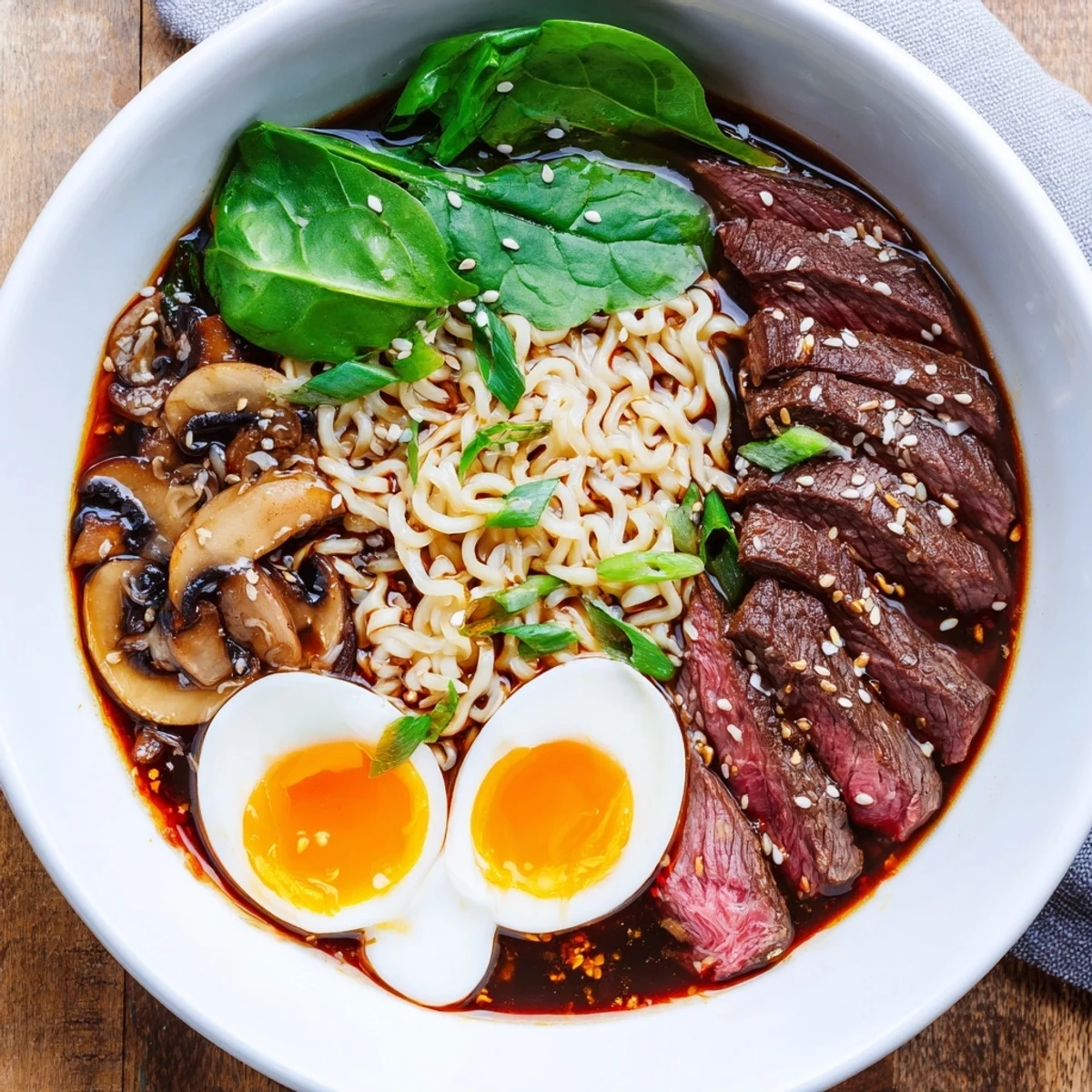
 This dish offers a bold blend of tender marinated beef simmered in a rich, spicy broth infused with chili paste and miso. Accompanied by perfectly soft-boiled eggs, shiitake mushrooms, and fresh greens, each bowl is layered with fresh ramen noodles and garnished with spring onions, sesame seeds, and strips of nori. The preparation includes marinating the beef for depth of flavor, gently boiling eggs to maintain creamy yolks, and assembling all components for a satisfying, hearty meal inspired by Japanese flavors.
I first tried making ramen at home on a rainy Tuesday when takeout felt too expensive and my kitchen smelled like ginger and garlic within minutes. The broth bubbled away while I panicked over egg timers, convinced I'd overcook them. When I finally slurped that first bowl, spicy and rich with a yolk that oozed into the broth, I realized restaurant ramen wasn't magic, just patience and heat. I've been hooked ever since.
I made this for my brother after he got stuck in a snowstorm, and he sat at my counter in his coat, thawing out over the steam. He didn't say much, just kept going back for more broth, fishing out every last mushroom. By the second bowl he'd finally stopped shivering, and I knew I'd nailed it. That's when this recipe stopped being just dinner and became my go to for anyone who needs warming up.
Ingredients
- Beef sirloin or flank steak: Thin slices cook fast and stay tender in the broth, but if you slice them too thick they turn chewy, so freeze the meat for 20 minutes before slicing for cleaner cuts.
- Soy sauce: This is your salt and umami base, and I learned the hard way that low sodium versions make the broth taste flat, so use regular and adjust at the end.
- Sesame oil: Just a teaspoon in the marinade adds a nutty richness that clings to the beef, and it smells incredible when it hits the hot broth.
- Chili paste: Gochujang gives a sweet heat while sambal oelek is sharper and brighter, so pick based on your mood or what's in your fridge.
- Miso paste: It deepens the broth with a fermented funk that makes everything taste more complex, and I always keep a tub in the fridge for exactly this reason.
- Chicken or beef stock: Homemade is great, but good boxed stock works perfectly fine and no one will know the difference once the spices hit.
- Fresh ramen noodles: They have more chew and absorb broth better than dried, but dried works in a pinch and cooks faster, so don't stress if that's all you have.
- Eggs: The secret is boiling for exactly 6 and a half minutes, then shocking them in ice water so the yolks stay creamy and orange, not chalky.
- Shiitake mushrooms: They soak up the broth and add an earthy bite, and I slice them thick so they don't disappear into the soup.
- Baby spinach or bok choy: Bok choy holds up better and adds crunch, but spinach wilts in seconds and tastes just as good, so use what you've got.
Instructions
- Marinate the Beef:
- Toss the sliced beef with soy sauce, sesame oil, cornstarch, and black pepper in a bowl, making sure every piece is coated. Let it sit for at least 10 minutes so the flavors soak in and the cornstarch helps the beef stay silky when it hits the broth.
- Prepare the Eggs:
- Bring water to a gentle boil, lower the eggs in carefully with a spoon, and set a timer for 6 to 7 minutes depending on how jammy you like the yolk. As soon as the timer goes off, plunge them into ice water to stop the cooking, then peel gently under running water so the whites stay smooth.
- Make the Broth:
- Heat vegetable oil in a large pot over medium heat, then add onion, garlic, and ginger, stirring until your kitchen smells like a ramen shop. Stir in chili paste and miso paste, letting them cook for a minute until they darken slightly and release their oils.
- Simmer the Broth:
- Pour in the stock, soy sauce, mirin, rice vinegar, and sugar, then bring everything to a gentle simmer and let it bubble quietly for 10 minutes. This is when the flavors marry and the broth turns from good to unforgettable.
- Cook the Beef and Vegetables:
- Add the marinated beef and sliced mushrooms to the simmering broth, letting them cook for 5 to 7 minutes until the beef is just done and the mushrooms are tender. Toss in the spinach or bok choy and cook for another minute or two until it wilts into the broth.
- Cook the Noodles:
- While the beef cooks, boil the ramen noodles in a separate pot according to the package instructions, then drain and rinse them briefly under hot water to remove excess starch. This keeps the broth clear and the noodles from clumping.
- Assemble the Bowls:
- Divide the noodles between four bowls, then ladle over the hot broth with beef, mushrooms, and greens, making sure everyone gets an equal share. Top each bowl with halved soft boiled eggs, spring onions, sesame seeds, nori strips, and a sprinkle of chili flakes if you want extra heat.
- Serve Immediately:
- Bring the bowls to the table while the broth is still steaming and the eggs are warm. Ramen waits for no one, and the noodles taste best before they soak up too much liquid.
 Save to Pinterest
 I remember the night my friend came over after a breakup, exhausted and quiet, and I set a bowl of this in front of her without saying much. She picked up her chopsticks, slurped the noodles, and by the time she cracked the egg and watched the yolk run into the broth, she was smiling a little. Sometimes a bowl of something hot and spicy is the best thing you can offer, no words required.
Customizing Your Ramen
Once you've made this a few times, you'll start tweaking it to match your mood or what's in the fridge. I've swapped beef for chicken thighs, added corn and bean sprouts, and even stirred in a spoonful of peanut butter when I wanted something richer. The base is forgiving, so treat it like a template and make it yours.
Storing and Reheating
Store the broth, beef, and vegetables separately from the noodles in airtight containers in the fridge for up to three days. When you're ready to eat, reheat the broth gently on the stove, cook fresh noodles, and assemble as usual so nothing gets soggy. The eggs are best made fresh, but leftover broth makes an incredible base for fried rice the next day.
Pairing and Serving Ideas
This ramen is a full meal on its own, but if you're feeding a crowd, start with edamame or crispy gyoza on the side. A cold Japanese beer or a pot of green tea cuts through the richness and keeps things balanced. I also like to put out small dishes of extra chili oil, sesame seeds, and sliced scallions so everyone can dial in their own heat and garnish.
- Serve with a side of pickled ginger or quick cucumber salad for a refreshing contrast to the spice.
- If you want more protein, add a handful of shrimp or cubed tofu to the broth along with the beef.
- Leftover broth freezes beautifully for up to two months, so double the batch and save yourself the work next time.
 Save to Pinterest
 This bowl has saved me on more nights than I can count, when I needed something fast, warm, and deeply satisfying. I hope it does the same for you.
Recipe FAQs
- → How do I achieve the perfect soft-boiled eggs?
-
Bring water to a gentle boil and cook the eggs for 6 to 7 minutes. Immediately transfer them to ice water to stop cooking and make peeling easier.
- → Can I substitute the beef with other proteins?
-
Yes, chicken or tofu can be used as alternatives; adjust cooking times accordingly to ensure proper doneness.
- → What is the key to a flavorful spicy broth?
-
Combining chili paste with miso paste, ginger, garlic, and soy sauce creates a rich and balanced spicy broth packed with umami.
- → How should the noodles be cooked?
-
Cook ramen noodles according to package instructions, then drain and rinse briefly under hot water to remove excess starch and keep them separate.
- → What toppings enhance this noodle bowl?
-
Garnish with sliced spring onions, toasted sesame seeds, nori strips, and a sprinkle of chili flakes to add texture and depth.