
 Save to Pinterest
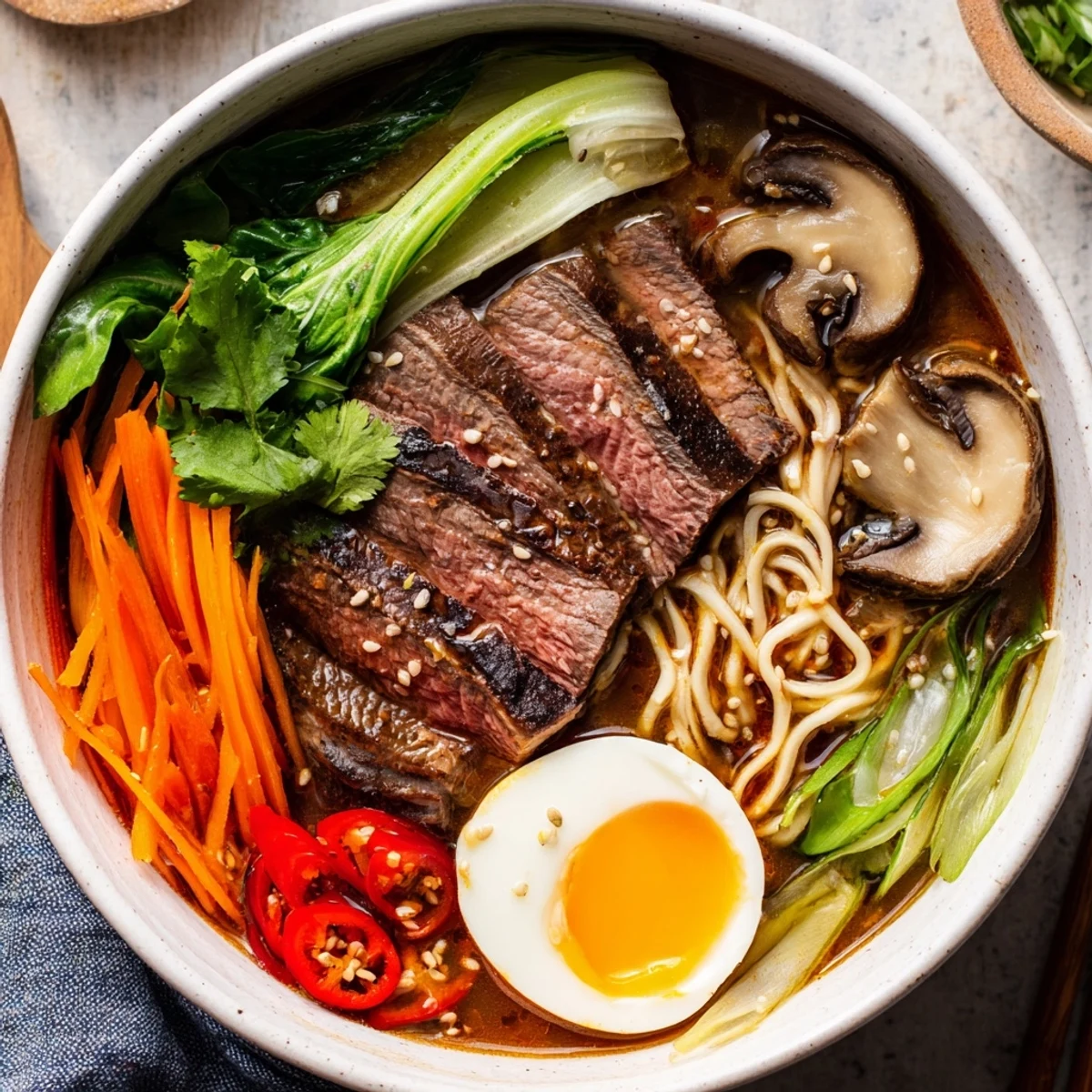
 This dish features tender flank steak marinated in soy and sesame, paired with chewy ramen noodles simmered in a rich, spicy broth infused with garlic, ginger, chili paste, and miso. Soft-boiled eggs add creamy texture while carrots, bok choy, and shiitake mushrooms provide freshness and balance. A splash of mirin and rice vinegar brighten the flavors, with garnishes of spring onions, sesame seeds, chili slices, and coriander completing the bowl. Ready in 45 minutes, it’s perfect for a medium-difficulty, satisfying main.
My kitchen smelled like charred garlic and chili paste the night I first attempted ramen from scratch, and honestly, I wasn't expecting much. The broth came together faster than I'd anticipated, steam rising in thick waves, and when I topped that first bowl with a glossy soft-boiled egg that broke into creamy rivers across the noodles, something clicked. This spicy beef ramen became the thing I'd crave on cold evenings and make for friends who needed feeding and comfort at once.
I made this for my sister during her first week in a new city, and watching her eat quietly for a moment before looking up with that satisfied expression—I knew I'd nailed something worth keeping around. She's now asked for it at least once a month, and I've learned that the ritual of making ramen for someone matters as much as the taste.
Ingredients
- Flank steak, thinly sliced: Cornstarch in the marinade isn't just tradition; it creates a velvety coating that catches the broth beautifully and keeps the beef impossibly tender even though you're searing it hard and fast.
- Chili paste: This is your backbone, and honestly, quality matters—a good gochujang or sambal oelek brings depth that raw chili powder never quite achieves.
- Miso paste: The umami anchor that makes people wonder what secret ingredient you're hiding; don't skip it or skimp on it.
- Fresh ramen noodles: They cook in under two minutes and have a texture dried ones struggle to match, so seek them out if you can.
- Soft-boiled eggs: Six minutes is precise, but timing varies slightly by altitude and egg size; the yolk should be creamy but the white fully set.
- Bok choy and shiitake mushrooms: These aren't just garnish—they absorb the spiced broth and add earthiness that balances heat.
Instructions
- Marinate the beef:
- Slice your flank steak against the grain into thin ribbons, then toss with soy sauce, sesame oil, cornstarch, and pepper. The cornstarch coating is crucial—it'll give the beef a silky texture when seared, and the soy sauce begins breaking down the proteins immediately. Give it at least 10 minutes, but up to an hour won't hurt.
- Soft-boil the eggs:
- Bring water to a rolling boil, gently lower in eggs, and set a timer for exactly six minutes. The ice bath stops them cooking the instant you pull them out—no gray ring around the yolk, just that perfect runny center waiting to mix into your broth.
- Build the broth foundation:
- Heat oil in a large pot and soften the onion until it's golden and sweet, about two minutes. Add garlic and ginger—you'll smell them transform almost immediately, becoming fragrant rather than sharp, which signals they're ready for the next step.
- Layer in spice and umami:
- Stir the chili paste and mushrooms together, letting them cook for two minutes so the paste begins to break down and release its flavor. Then add soy sauce, miso, mirin, and rice vinegar in quick succession—each one dissolves into the previous, building complexity.
- Add the broth:
- Pour in beef broth and water, then let it all come to a gentle simmer; aggressive boiling can make the broth taste bitter and thin. Taste it here and adjust seasoning—this is your moment to balance spice, saltiness, and depth.
- Sear the beef:
- Heat a skillet until it's properly hot (a drop of water should sizzle immediately), then add beef in a single layer and leave it alone for a full minute. You're not fully cooking it; you're creating a browned crust that'll finish cooking in the hot broth in the bowl.
- Finish the vegetables:
- Add carrots and bok choy to the simmering broth and let them cook for three to four minutes until just tender but still with a slight bite. They'll continue softening in the heat of your bowl, so pull them a touch early.
- Cook the noodles:
- Follow package instructions—fresh noodles usually cook in 90 seconds to two minutes. Drain them gently and divide among bowls before ladling the broth, which keeps the noodles from clumping and allows you to control the ratio of noodles to liquid.
- Assemble and serve:
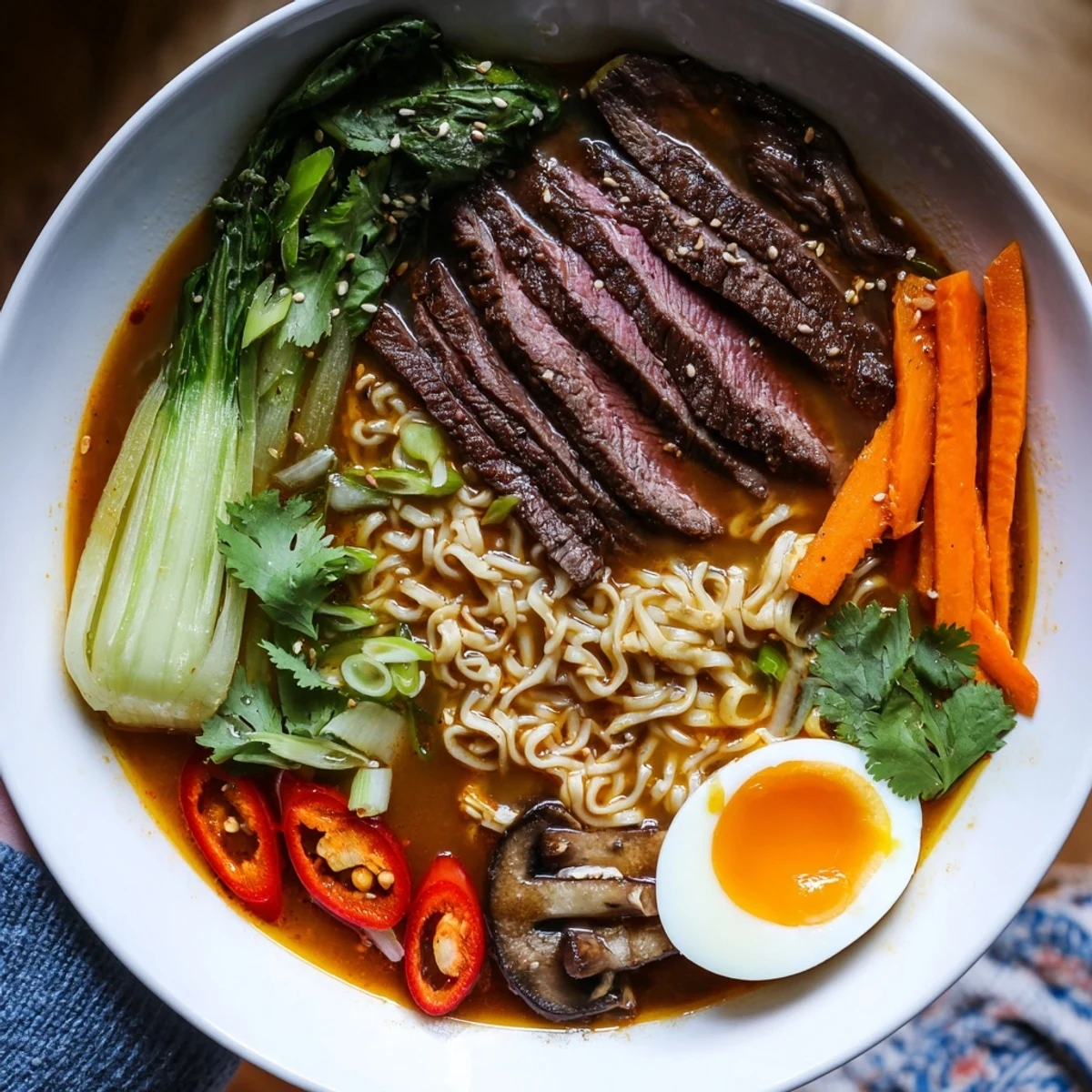
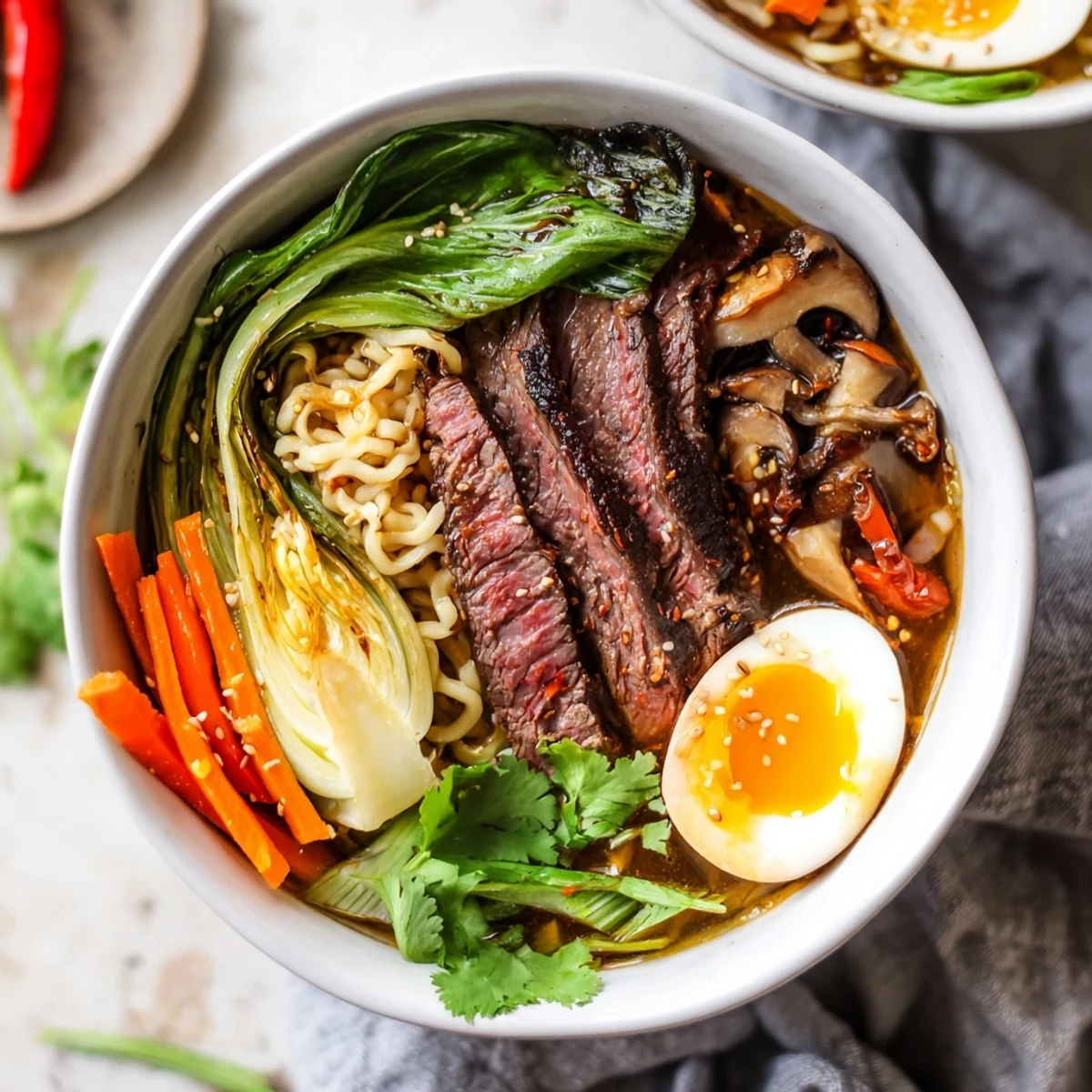
- Ladle the hot broth and vegetables over noodles, then top with seared beef, a halved soft-boiled egg (yolk facing up so it'll break into the bowl), spring onions, sesame seeds, chili slices, and a scatter of coriander. The heat of the broth will release the aroma of fresh herbs, signaling that everything's ready to eat immediately.
 Save to Pinterest
 There's a moment, always the same one, when you crack that soft-boiled egg into your ramen and watch the yolk bloom into the broth like sunset bleeding into water. It's small, but it transforms the entire bowl from good to something you'll think about for days afterward.
Customizing Your Bowl
The beauty of ramen is that once you've mastered the broth and noodles, everything else is negotiable. I've made this with thin-sliced chicken thighs instead of beef, which cook in the same time and absorb the spice differently, becoming almost silky. Tofu enthusiasts should press extra-firm tofu, cube it, and either pan-fry until golden or add it straight to the simmering broth—it'll take on flavor like nothing else. Even pork tenderloin sliced thin and seared quickly works beautifully. The vegetables are equally flexible; substitute whatever's in season or what you have on hand, keeping in mind that harder vegetables need a few extra minutes and tender greens need just a minute or two.
Managing the Heat
This recipe is spicy but not overwhelming—it's meant to warm you rather than set your mouth on fire. If you're sensitive to heat, reduce the chili paste by half and taste the broth before committing; you can always add more, but you can't take it back. Those who crave genuine fire should add a drizzle of chili oil right before serving or pass extra chili paste at the table so everyone can adjust their own bowl. The acid from the rice vinegar in the broth actually makes the spice feel sharper and more present, so if something feels flat, adding a touch more vinegar often wakes the whole dish up rather than turning up the heat.
Pairing and Timing
Ramen tastes best eaten immediately while the broth is steaming and the noodles are at their most tender, so have your bowls ready and your guests seated before you finish assembly. A crisp Japanese lager cuts through the richness and heat perfectly, or if you prefer sake, choose something chilled and dry that won't compete with the spice. The entire dish, from start to finish, takes about 45 minutes, which means you can start cooking and have dinner on the table in less time than it takes to order and receive delivery.
- If you're feeding more than four, double the broth but keep beef quantities the same per person for easier searing.
- Leftover broth freezes beautifully for up to three months, so make extra and save yourself time next week.
- Soft-boiled eggs are best eaten the day they're made; stored eggs develop that gray ring and lose their creamy center appeal.
 Save to Pinterest
 This ramen has become one of those recipes I make without really thinking anymore, my hands moving through the steps while my mind wanders, and somehow it always turns out exactly right. That's the mark of something worth making again and again.
Recipe FAQs
- → How do I achieve the perfect soft-boiled egg?
-
Boil eggs for exactly 6 minutes, then immediately transfer to ice water to stop cooking and ensure a tender, slightly runny yolk.
- → Can I substitute beef with other proteins?
-
Yes, chicken, pork, or tofu can be used as alternatives for a different flavor profile while maintaining balance.
- → What gives the broth its spicy flavor?
-
Chili paste such as gochujang or sambal oelek imparts a rich, layered heat complemented by garlic and ginger.
- → How should ramen noodles be cooked for best texture?
-
Cook noodles according to package instructions, drain promptly, and serve immediately to keep them chewy and firm.
- → What garnishes enhance the final dish?
-
Spring onions, toasted sesame seeds, fresh chili slices, and coriander add freshness, crunch, and aromatic depth.
- → Can this dish be adjusted for spiciness?
-
Yes, adjust the chili paste quantity or add chili oil to suit your preferred heat level.