
 Save to Pinterest
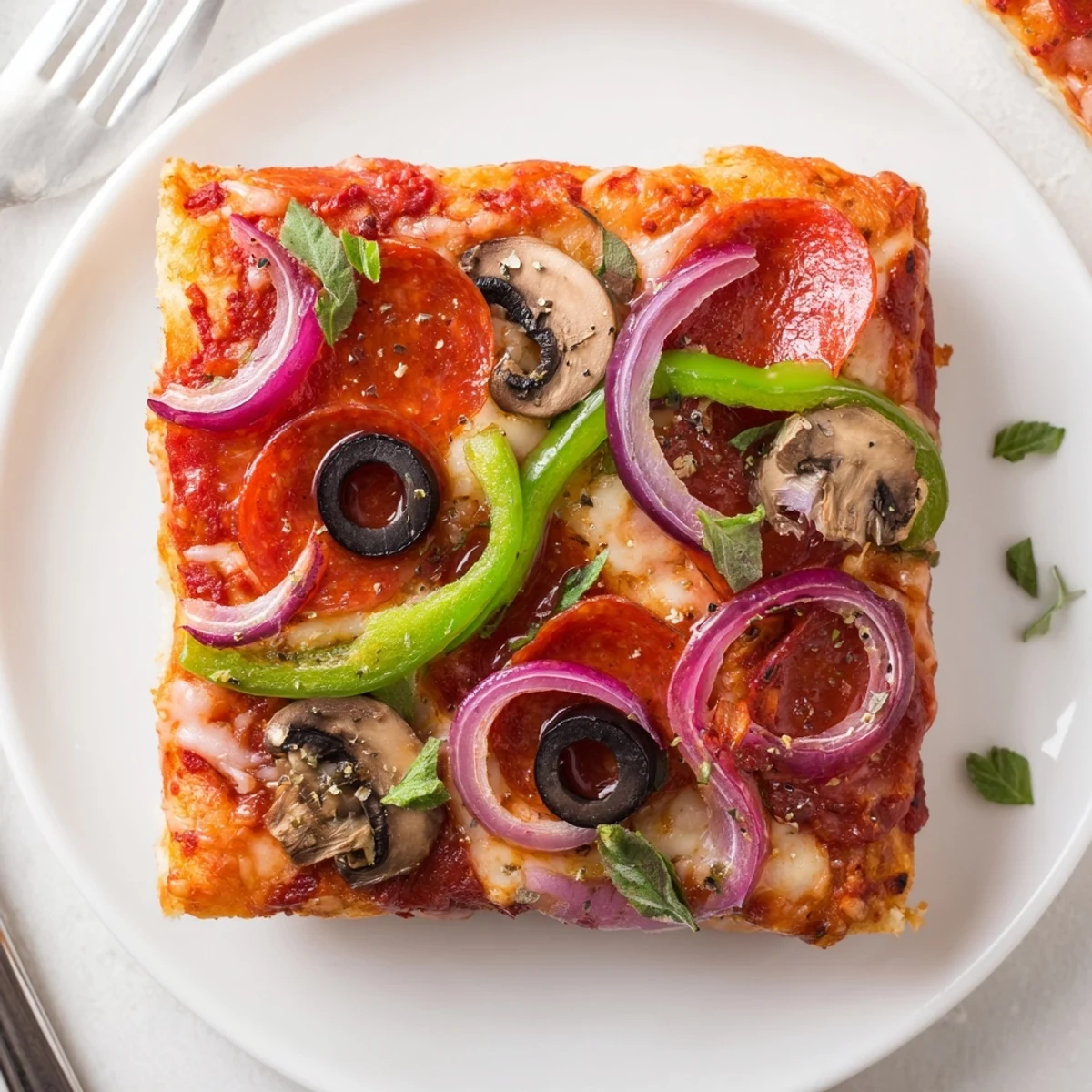
 This focaccia-style supreme pairs a high-hydration dough that yields a soft, airy crumb with a bright passata, melted mozzarella and a mix of peppers, olives and mushrooms. After a gentle 1–2 hour rise the dough is stretched, dimpled and lightly pre-baked to avoid sogginess. Top, return to a hot oven until cheese melts and edges turn golden, then rest briefly and finish with fresh basil.
The rain was hammering against the kitchen window the afternoon I stumbled onto the idea of mashing focaccia and pizza together. I had a bowl of dough rising on the counter and a half empty jar of passata staring me down from the fridge door. Something about the stubborn grey sky made me crave the pillowy comfort of focaccia but with the loud, cheesy exuberance of a supreme pizza.
My neighbor Luca stopped by unannounced that evening, attracted entirely by the smell drifting through the hallway. He stood in the doorway holding a bottle of Chianti and said nothing, just pointed at the oven and raised an eyebrow. We ate the entire sheet pan between the two of us, standing at the counter, tearing off ragged pieces with our hands.
Ingredients
- All purpose flour (500 g): Bread flour works too, but all purpose gives that tender chew I prefer for focaccia style crusts.
- Warm water (375 ml): Should feel like a warm bath to your finger, not hot, since scalding water kills the yeast.
- Instant yeast (10 g): No blooming required, just stir it straight in and trust the process.
- Fine sea salt (10 g): Salt and yeast are old rivals, so add them on opposite sides of the bowl before mixing.
- Extra virgin olive oil (50 ml plus more for drizzling): Be generous here, the oil is what gives focaccia its signature crisp bottom and richness.
- Passata or tomato purée (200 ml): A smooth, unseasoned base lets you control the flavor entirely.
- Garlic, minced (1 clove): One is enough for a quiet hum in the sauce without overpowering everything.
- Dried oregano (1 tsp): Rub it between your palms before adding to wake up the oils.
- Mozzarella, shredded (150 g): Low moisture mozzarella melts more reliably than the fresh kind on this dough.
- Red and green bell peppers (½ each): Slice them thin so they soften in the short bake time.
- Red onion (½ small): Thin slices curl beautifully and char slightly at the edges.
- Black olives, sliced (60 g): Kalamata add a briny punch that balances the rich cheese.
- Mushrooms, sliced (75 g): Cremini hold their shape better than button mushrooms under high heat.
- Fresh basil, chopped (1 tbsp): Always add after baking so the leaves stay bright and fragrant.
Instructions
- Build the dough:
- In a large bowl, combine the flour, yeast, and salt on opposite sides. Pour in the warm water and olive oil, then stir with a wooden spoon until you have a shaggy, sticky mass that looks impossible to tame.
- Knead and wait:
- Wet or oil your hands and give the dough a brief fold in the bowl for one to two minutes. Cover tightly and tuck it somewhere warm for one to two hours until it puffs up dramatically.
- Simmer the sauce:
- While the dough naps, warm olive oil in a small saucepan, sauté the garlic until fragrant, then add the passata, oregano, salt, and sugar. Let it burble gently for ten minutes until thickened, then set aside to cool.
- Stretch onto the pan:
- Oil a large baking sheet generously, then tip the risen dough onto it. Use oiled fingertips to coax it toward the edges, and if it springs back stubbornly, walk away for fifteen minutes and try again.
- Pre bake the base:
- Preheat the oven to 220 degrees Celsius. Dimple the dough all over with your fingertips, drizzle with more oil, and bake for ten minutes until the surface is just set but still pale.
- Load on the toppings:
- Spread the sauce evenly across the parbaked focaccia. Scatter the mozzarella, then arrange the peppers, onion, olives, mushrooms, and pepperoni if using in colorful patches across the surface.
- Finish baking:
- Return the pan to the oven for fifteen more minutes until the cheese is bubbling and the crust edges glow a deep golden brown.
- Rest and garnish:
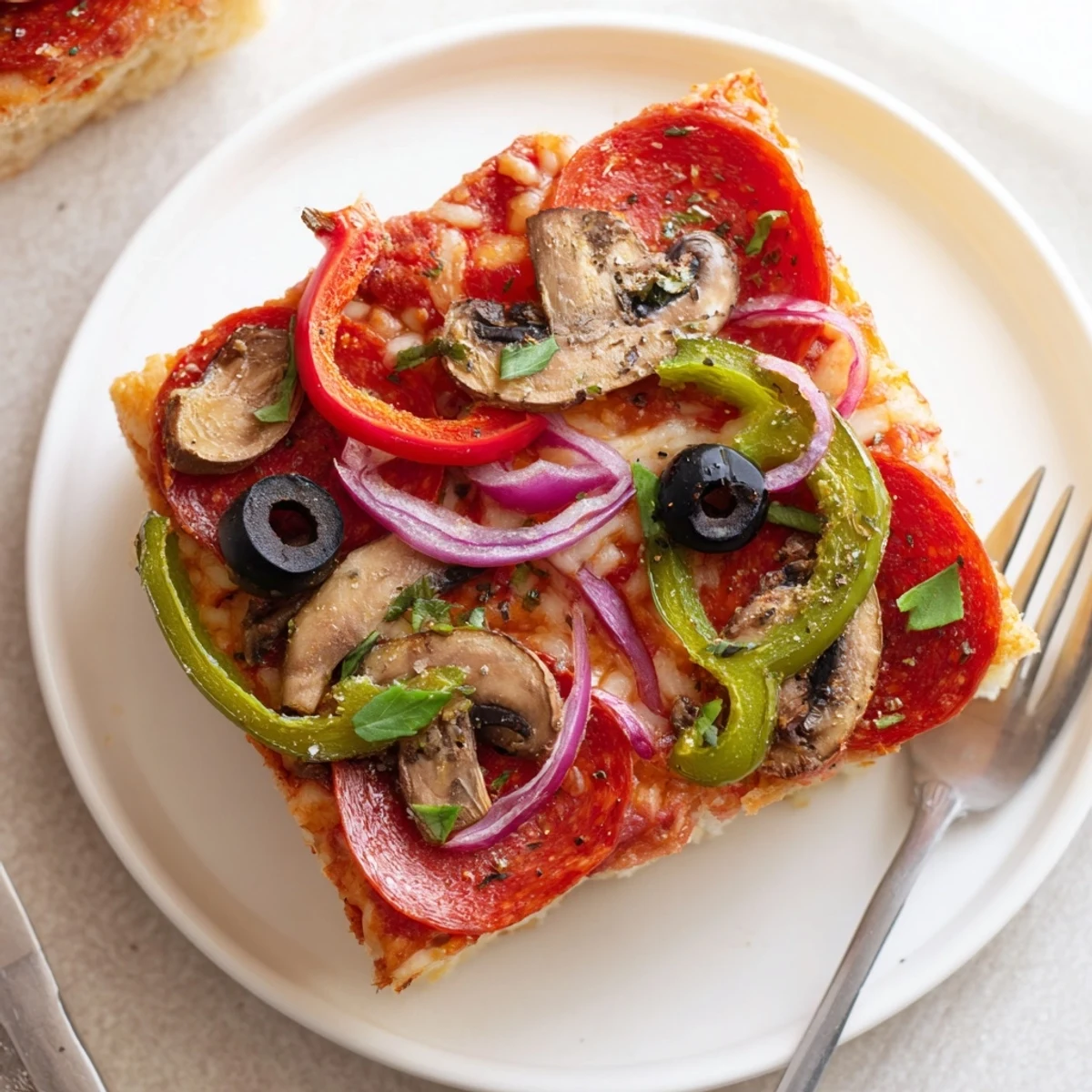
- Let it sit for five minutes so the cheese settles, then shower with fresh basil, crack over some black pepper, and slice into rough squares.
 Save to Pinterest
 That pan lasted maybe fifteen minutes once Luca and I started eating. The kitchen still smelled like toasted olive oil and basil the next morning, and I caught myself reheating a cold square for breakfast without a shred of guilt.
Choosing Your Toppings
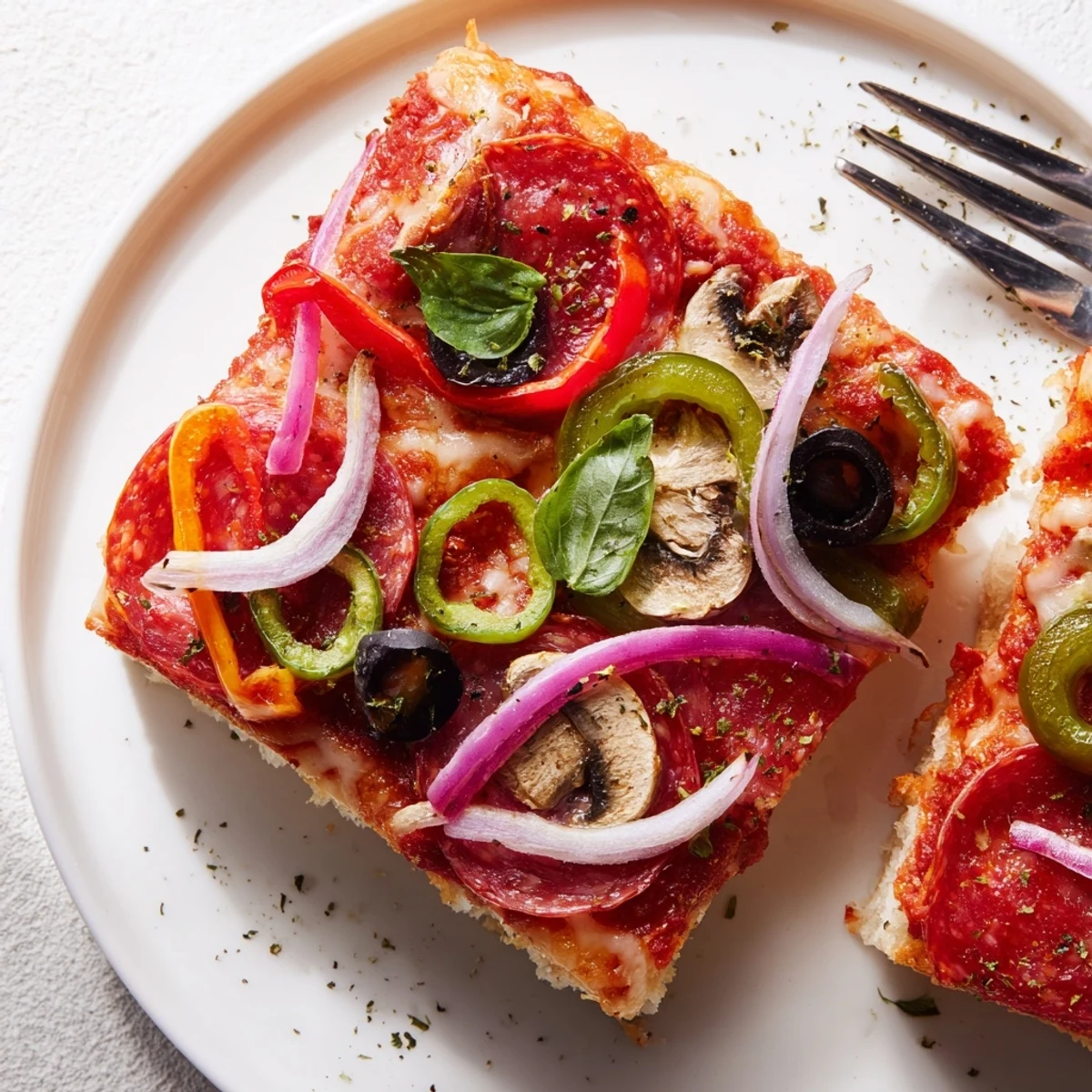
Think of the focaccia base as a blank canvas that handles moisture better than traditional pizza dough, so do not be shy with saucy or wet toppings. Artichoke hearts, sun dried tomatoes, and caramelized onions have all made appearances in my kitchen with excellent results. Just avoid piling things too high, since a heavy load stops the dough from rising properly in the final bake.
Making the Dough Ahead
The overnight refrigerator method is a quiet revelation I now refuse to skip. Mix the dough before bed, cover it, and let the cold slow the fermentation while you sleep. The next day it will have developed a deeper, slightly tangy complexity that same day dough never quite achieves.
Serving and Pairing
This is fingers food at its core, best served on a big wooden board in the middle of the table with everyone reaching in. A peppery arugula salad cuts through the richness, and a medium bodied Italian red like Montepulciano makes everything taste more intentional.
- Let the focaccia rest the full five minutes before slicing or the cheese will slide right off.
- A drizzle of good olive oil and flaky salt on top just before serving makes each bite sing.
- Leftovers reheat beautifully in a hot oven for five minutes, so never throw them away.
 Save to Pinterest
 Some dishes become fixtures in your kitchen because they ask for so little and give back so much. This focaccia pizza is exactly that, a forgiving, riotous, deeply satisfying thing that turns a rainy afternoon into something worth remembering.
Recipe FAQs
- → How do I achieve an airy focaccia crust?
-
Use warm water and instant yeast, keep a slightly sticky, high-hydration dough, and avoid over-kneading. Let it rise until doubled, stretch gently to retain air pockets, dimple the surface, and use plenty of olive oil for tenderness and flavor.
- → Is prebaking the dough necessary?
-
Yes. A short pre-bake sets the structure and prevents the sauce from soaking into the dough, resulting in a lighter interior and crisping at the edges once the toppings are added and returned to the oven.
- → Can I make a vegetarian version?
-
Absolutely. Omit cured meats and boost flavor with extra vegetables like artichokes or sun-dried tomatoes, or use plant-based slices. Finish with fresh basil and a drizzle of olive oil for balance.
- → How should leftovers be stored and reheated?
-
Cool completely, wrap or cover and refrigerate for up to 2 days. Reheat in a hot oven or skillet to revive crispness; a brief blast at high heat restores the crust better than a microwave.
- → How can I get crisper edges without drying the center?
-
Increase oven temperature slightly and position the sheet closer to the lower rack for direct heat. Use a thin spread of olive oil on the pan and avoid overloading toppings so edges can brown while the center stays tender.
- → Can the dough be prepared ahead of time?
-
Yes. After mixing, refrigerate the dough overnight for a slow cold fermentation to develop flavor. Bring it back to room temperature before stretching and proceed with the short rise and pre-bake.